Vitamin K for Adults Over 40: An In-Depth Review
Vitamin K is probably the most overlooked vitamin in the entire supplement landscape. Most adults over 40 have heard of Vitamin D, calcium, and magnesium. Very few have given much thought to Vitamin K2. That is a significant gap, because K2 plays a specific and critical role that none of the better-known nutrients can cover on their own.
This review explains what Vitamin K actually does, why K2 in particular matters so much after 40, what the research shows for bone and cardiovascular health, and how to choose and take a supplement that is worth the money.
What Is Vitamin K?
Vitamin K is a fat-soluble vitamin with two main dietary forms that have meaningfully different functions in the body. Understanding the difference between them is important before deciding whether and how to supplement.
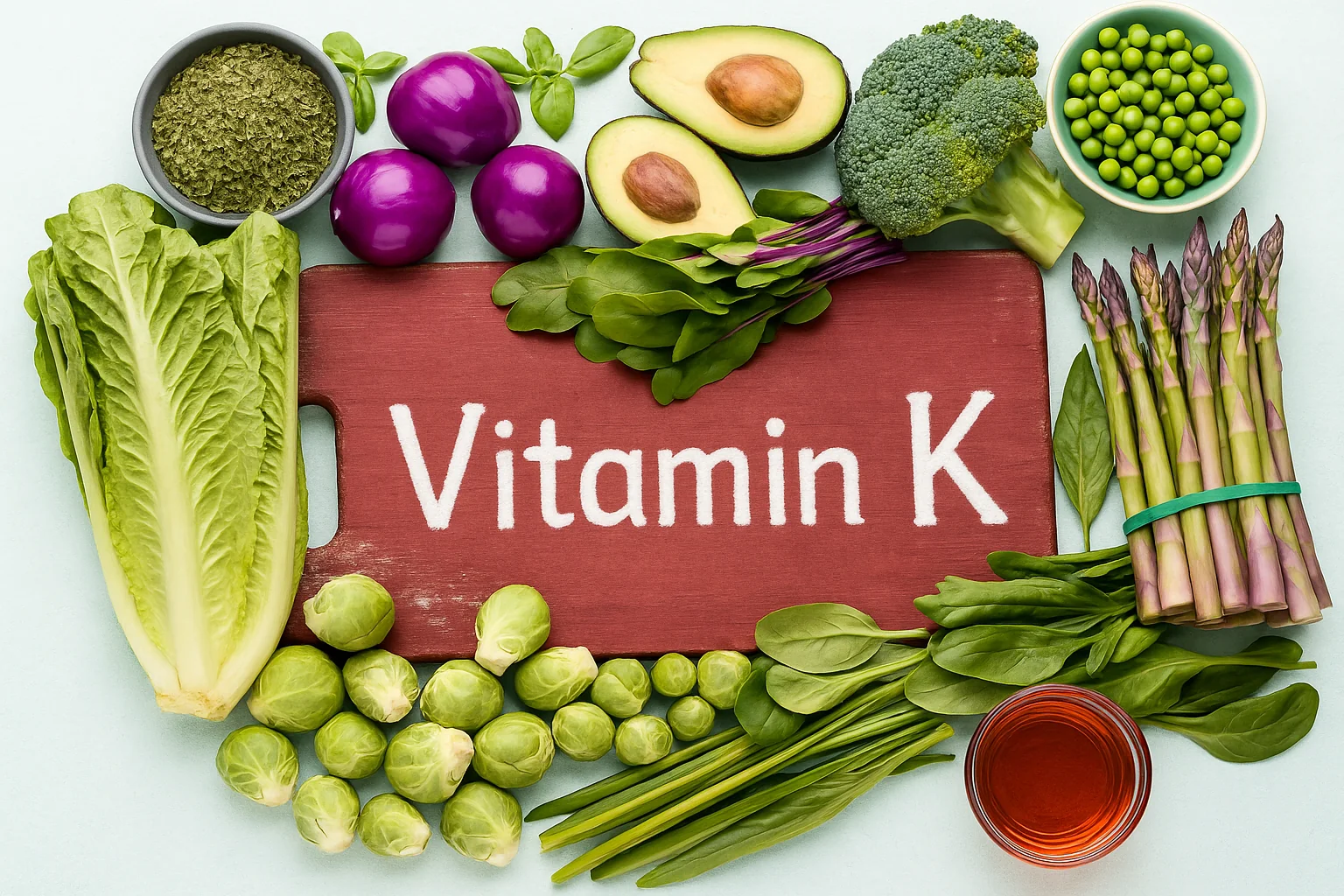
Vitamin K1 (phylloquinone) is found primarily in leafy green vegetables like kale, spinach, and broccoli. The liver uses it mainly to activate clotting factors that control bleeding. Most people with a reasonably varied diet get adequate K1 from food. Its role in bone and cardiovascular health is limited compared to K2.
Vitamin K2 (menaquinone) comes from fermented foods and animal products. It activates different proteins to K1, specifically osteocalcin in bone tissue and Matrix Gla Protein (MGP) in artery walls. These proteins direct calcium to where it belongs and keep it away from where it causes harm. K2 is the form most relevant to healthy ageing, and the one most likely to be insufficient in a typical Western diet.
Within K2, two subtypes matter most. MK-4 is found in animal products and has a short half-life in the body, meaning it clears quickly and requires more frequent dosing to maintain consistent blood levels. Produced through bacterial fermentation, MK-7 is found mainly in natto, a Japanese fermented soybean food. Its half-life of around 72 hours is significantly longer than MK-4. A single daily dose therefore maintains stable blood levels throughout the day. For supplementation purposes, MK-7 is the better-supported form for both bone and cardiovascular health.
Why Vitamin K2 Matters More After 40
The central problem Vitamin K2 addresses is calcium misplacement. After 40, bone density declines as resorption outpaces formation. At the same time, arterial calcification, the build-up of calcium in artery walls, becomes a growing cardiovascular risk factor. These two problems are connected, and K2 addresses both through the same underlying mechanism.
When K2 is insufficient, the proteins that direct calcium traffic remain inactive. Osteocalcin stays in its inactive form and cannot bind calcium into bone. MGP cannot prevent calcium from accumulating in vessel walls. The result is calcium depositing in arteries rather than building into bone. This is sometimes described as calcium paradox, where bone loses density while arteries simultaneously calcify.
K2 deficiency is common in Western populations. Natto, the richest dietary source of MK-7, does not feature in typical Western diets. Hard cheeses, egg yolks, and grass-fed meat provide MK-4. Their amounts fall well short of the doses used in research trials.
Key Benefits: What the Research Shows
Bone Density and Fracture Risk
The bone health evidence for Vitamin K2 is well-developed. Osteocalcin is the most abundant non-collagen protein in bone, and it requires K2 to become activated. Once active, osteocalcin binds calcium into the bone matrix, contributing directly to bone density and structural strength.
A three-year trial in postmenopausal women found MK-7 supplementation significantly reduced bone density decline compared to placebo. Furthermore, bone strength markers also improved in the treatment group. This is a clinically meaningful finding for women moving through perimenopause and menopause, where oestrogen decline accelerates bone loss. Japan has used high-dose MK-4 as a medical treatment for osteoporosis for decades, and the clinical evidence base behind it is strong.
Adding K2 completes the picture for adults over 40 already taking Vitamin D and calcium for bone health. Vitamin D drives calcium absorption from the gut, calcium provides the mineral substrate, and K2 ensures that calcium ends up in bone rather than circulating or depositing elsewhere.
Cardiovascular Health and Arterial Calcification
The cardiovascular evidence for Vitamin K2 is compelling and arguably underappreciated in mainstream health discussions. Matrix Gla Protein is one of the most potent inhibitors of arterial calcification known. However, it requires K2 to activate. Without adequate K2, therefore, it cannot prevent calcium from hardening artery walls.
The Rotterdam Study followed over 4800 adults and found higher K2 intake correlated with less arterial calcification, lower coronary heart disease rates, and reduced all-cause mortality. Importantly, these associations were specific to K2 rather than K1. A follow-up Dutch study, the Prospect-EPIC cohort, subsequently replicated these findings in a different population.
Intervention trials confirm MK-7 supplementation increases activated MGP levels and reduces arterial stiffness in healthy adults. This represents a direct mechanistic link between K2 and measurable cardiovascular improvements. For adults over 40, whose cardiovascular risk rises with age, it is consequently worth taking seriously.
Cognitive Health
Emerging research links Vitamin K status to cognitive function in older adults. Vitamin K-dependent proteins are present in the brain, and some evidence suggests K2 plays a role in protecting brain cells from oxidative stress. Observational studies find associations between higher Vitamin K intake and better memory and cognitive performance in older adults.
The cognitive evidence is less developed than the bone and cardiovascular research and is not yet sufficient to make strong clinical claims. Nevertheless, the data consistently points in a positive direction. Given the established cardiovascular benefits, K2 is well-justified for broader healthy ageing even without the cognitive evidence standing alone.
K1 versus K2: Which Should You Supplement?
For the specific health concerns most relevant to adults over 40, K2 is the answer. K1 handles blood clotting efficiently and most people get enough through diet. K2 addresses the bone density and arterial calcification mechanisms that become increasingly significant after 40, and dietary K2 intake is typically insufficient in Western diets to activate these pathways fully.
K1 supplementation has little evidence behind it for bone or cardiovascular benefit. By contrast, K2 as MK-7 has the strongest evidence base for both, with the additional practical advantage of a long half-life that makes once-daily dosing effective.
MK-4 versus MK-7
Both MK-4 and MK-7 have evidence behind them, but they differ in important practical ways. The Japanese osteoporosis trials use MK-4, but those protocols require 15 mg three times daily to achieve their effects. That is dramatically higher than the microgram-level doses found in standard supplements. Consequently, at 100 to 500 mcg, the evidence for MK-4 benefit is limited.
MK-7 achieves meaningful effects at 90 to 200 mcg per day. Moreover, its longer half-life means one daily dose maintains effective blood levels consistently. For adults over 40, therefore, MK-7 at 100 to 200 mcg per day is the well-supported choice.
Dosage Guidance
For bone and cardiovascular health in adults over 40, 100 to 200 mcg of MK-7 per day is the dose range used in most positive clinical trials. The official RDA is 90 mcg per day for women and 120 mcg for men. However, these figures reflect K1 requirements for blood clotting, not K2 requirements for bone and cardiovascular health.
Take Vitamin K2 with a meal containing fat. As a fat-soluble vitamin, absorption needs dietary fat. Taking K2 alongside Vitamin D is a natural combination since both are fat-soluble, and many combined D3 and K2 supplements are available for exactly this reason.
The Warfarin Interaction
This is the one important safety consideration for Vitamin K supplementation. Warfarin blocks Vitamin K-dependent clotting factors, and supplemental Vitamin K can reduce its anticoagulant effect. As a result, anyone on warfarin or Vitamin K-dependent anticoagulants must consult their GP before supplementing with any form of Vitamin K.
For everyone else, Vitamin K2 at recommended doses has an excellent safety profile. Most health authorities have set no upper intake level because toxicity from K2 supplementation is undocumented at research doses.
Choosing a Quality Supplement
Look for MK-7 form specifically, with a dose of at least 90 mcg per serving. The source matters: MK-7 derived from natto is the form with the strongest evidence and best bioavailability. Some products use synthetic MK-7, which appears comparable in bioavailability but has less research history behind it.
Third-party testing is worth prioritising because Vitamin K2 products vary considerably in actual content versus label claims. Independent laboratory verification confirms what you are actually getting.
A combined D3 and K2 supplement is sensible for most adults over 40, since the two nutrients work together mechanistically. One product covers both without adding extra capsules. For a full picture of how these nutrients interact with calcium and each other, our complete over-40 supplement guide covers the bone health triad in more detail.
Frequently Asked Questions
Do I need K2 if I already take Vitamin D? Yes, particularly at higher Vitamin D doses. Vitamin D increases calcium absorption from the gut. K2 determines where that calcium ends up. Taking high-dose D without K2 increases the amount of calcium circulating in the body without ensuring it gets directed into bone. Supplementing both together is the more complete approach.
Can I get enough K2 from food alone? Possibly, but only with regular natto consumption or large quantities of hard cheese, egg yolks, and grass-fed animal products. For most adults on a typical Western diet, K2 intake falls well short of what research trials use to show cardiovascular and bone benefits.
Is it possible to take too much Vitamin K2? No toxicity from K2 supplementation has been documented in the clinical literature at the doses used in research. Its safety profile is excellent. The only meaningful concern remains the warfarin interaction described above.
Does Vitamin K2 affect blood clotting? At the doses used in general health supplementation (100 to 200 mcg MK-7 per day), Vitamin K2 has negligible effects on blood clotting in people not taking anticoagulants. K1 is the primary form involved in clotting factor activation, and the doses of K2 in typical supplements do not meaningfully alter this process.
The Bottom Line
Vitamin K2 is one of the most undervalued nutrients in midlife health. Its role in directing calcium traffic addresses two of the most significant changes after 40: declining bone density and rising arterial calcification risk. The research base is solid, the safety profile is excellent, and dietary intake in Western diets is typically insufficient to cover the full benefit.
Adults already taking Vitamin D and calcium for bone health will find K2 is the missing piece. Those concerned about cardiovascular health have an equally compelling case in the Rotterdam Study data and the MGP activation mechanism. Take MK-7 at 100 to 200 mcg per day with a fat-containing meal.
If you are taking warfarin or any Vitamin K-dependent anticoagulant, speak with your GP before adding any form of Vitamin K to your routine.