Iron for Adults Over 40: An In-Depth Review
Iron is the mineral most likely to divide adults over 40 into two very different camps. Women who are still menstruating often face iron deficiency as a genuine and persistent problem, accounting for fatigue, poor concentration, and slow recovery in ways that go unrecognised for months or years. Supplementing iron without confirmed need, however, creates a different and potentially more serious problem for other adults. Getting it right requires a degree of care that the supplement market rarely reflects.
This review covers what iron does in the body, why its requirements and absorption shift after 40, how to test properly, which supplement forms are worth choosing, dosage guidance, and crucially, who should and should not be supplementing at all.
What Iron Does in the Body
Iron’s best-known role is in haemoglobin, the protein in red blood cells that carries oxygen from the lungs to every tissue in the body. Around 70% of the body’s iron sits in haemoglobin. Another 6% sits in myoglobin, the muscle protein that stores and releases oxygen during activity. The remaining iron distributes across enzymes involved in energy production, immune function, and neurotransmitter metabolism.
This broad distribution explains why iron deficiency produces symptoms across multiple systems simultaneously. Fatigue and breathlessness reflect impaired oxygen delivery. Brain fog reflects reduced iron availability for neurotransmitter production. Impaired immunity reflects iron’s role in immune cell activity. Hair thinning and brittle nails reflect slowed cellular regeneration. Deficiency is therefore so often mistaken for general ageing rather than a specific nutritional problem.
The Two Types of Dietary Iron
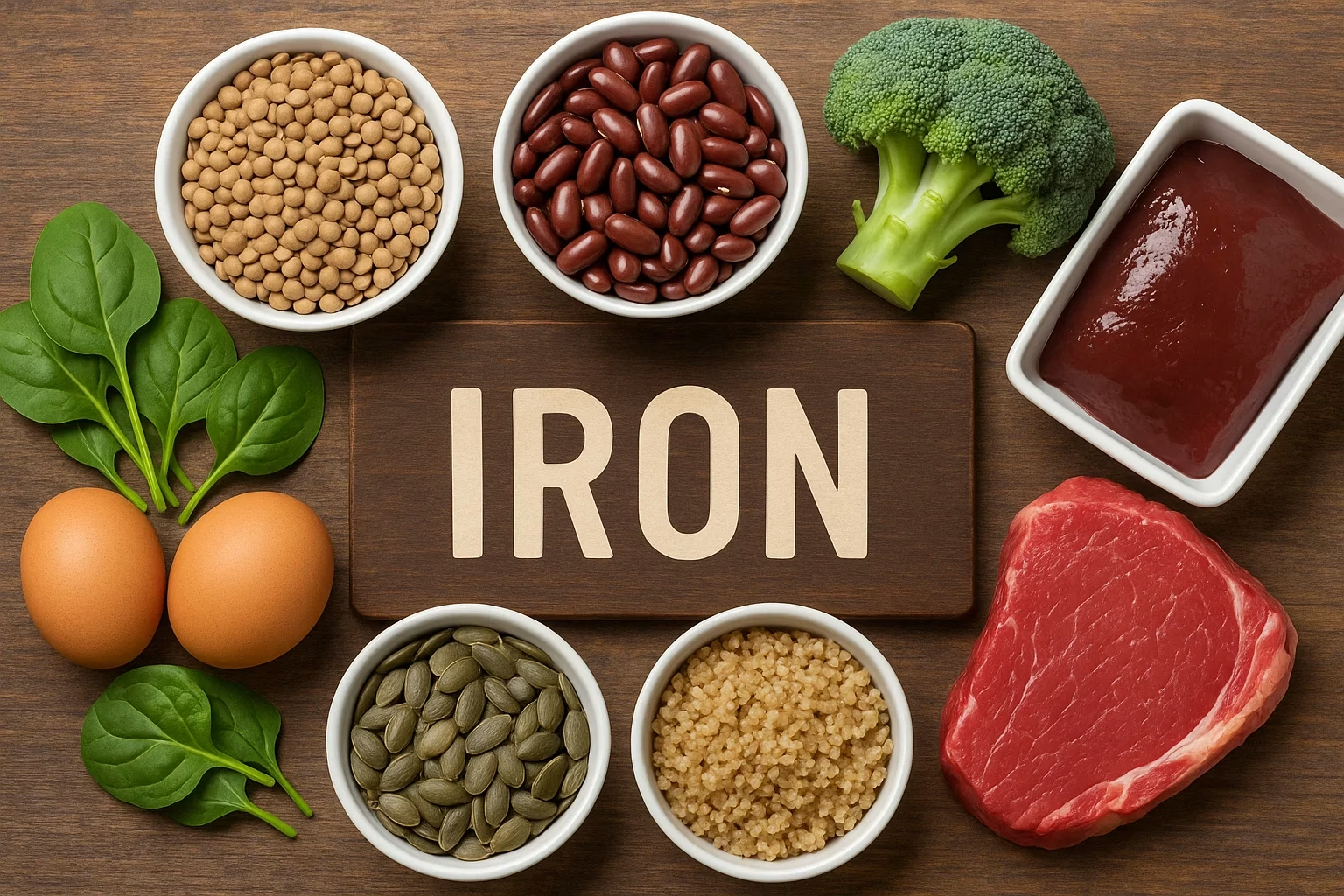
Haem iron comes from animal foods, primarily red meat, offal, poultry, and fish. Absorption rates run at 15 to 35% depending on iron status, delivered through a dedicated transport mechanism. Non-haem iron comes from plant foods including legumes, tofu, spinach, pumpkin seeds, and fortified cereals. It absorbs considerably less efficiently, at rates of 2 to 20%, and its absorption depends heavily on what else is consumed at the same meal.
Vitamin C significantly enhances non-haem iron absorption by converting iron from its ferric to its ferrous form in the gut, making it available for uptake. Consuming Vitamin C alongside plant-based iron sources can double or triple absorption. Calcium, tannins in tea and coffee, and phytates in bran and legumes all reduce non-haem iron absorption when consumed together.
Why Iron Status Changes After 40
Women: A Transition Period
For women, the years around 40 typically represent a transition in iron requirements. Throughout the reproductive years, menstrual blood loss is the dominant driver of iron requirements and the most common cause of deficiency. As periods become irregular during perimenopause and eventually cease, this loss reduces and the iron requirement falls from 18 mg per day to 8 mg per day after menopause.
However, the transition period creates its own challenges. Irregular, heavier, or more prolonged periods are common in perimenopause and can increase iron losses rather than reduce them, at least temporarily. Women in their 40s with heavy or unpredictable menstrual bleeding are among those most likely to develop deficiency.
Men: Hidden Loss and Reduced Absorption
Men do not have the obvious iron loss mechanism that premenopausal women have. Men over 40, however, face increased risk of gastrointestinal blood loss from peptic ulcers, gastritis, colorectal polyps, and colorectal cancer, all of which become more prevalent with age. Chronic NSAID use, common in midlife, irritates the gut lining and causes low-level bleeding that depletes iron stores over months without obvious symptoms.
Iron deficiency in men over 40 warrants investigation for blood loss rather than simply treating it with a supplement. This is a clinically important point that distinguishes iron from almost every other mineral covered on this site.
Absorption Changes
Gastric acid production declines with age, and acid plays an important role in converting dietary iron to the absorbable ferrous form. Adults taking proton pump inhibitors (PPIs) or H2-blockers face a further reduction in iron absorption. Inflammatory bowel disease, coeliac disease, and gastric bypass surgery all impair absorption at the intestinal level. These conditions become more common or more likely to have been diagnosed by midlife, adding to the risk profile.
How to Test Iron Status Properly
This is where the iron picture differs most significantly from other minerals. Getting tested before supplementing is not optional advice for iron. It is a clinical necessity, since supplementing when iron status is already normal or elevated causes meaningful harm.
Serum Ferritin
Ferritin is the storage protein for iron, and serum ferritin is the most clinically useful single test for iron status. Low ferritin indicates depleted iron stores, often before anaemia develops. Most laboratories set the normal range from 12 to 15 ng/mL for women, but many practitioners consider levels below 30 to 50 ng/mL functionally insufficient, particularly for adults with fatigue or hair loss.
High ferritin warrants attention for different reasons. Elevated ferritin can indicate iron overload, inflammation, liver disease, or haemochromatosis. Supplementing when ferritin is already elevated risks worsening any of these conditions.
Full Iron Panel
A complete picture includes serum iron, transferrin saturation, total iron-binding capacity (TIBC), and haemoglobin. Together, these markers distinguish between anaemia, functional deficiency, and iron overload. Asking for this full panel rather than just a haemoglobin check gives the clearest diagnostic picture.
When to Test
Adults with multiple symptoms of deficiency should test before starting any iron supplement. Women approaching menopause with changing menstrual patterns should monitor iron status annually. Men over 40 with unexplained iron deficiency should investigate gastrointestinal causes before treating the deficiency. Retesting 8 to 12 weeks after starting supplementation confirms that levels are responding and guides dose adjustment.
Key Benefits of Correcting Iron Deficiency
Energy and Physical Performance
The most immediate and consistently reported benefit of correcting iron deficiency is improved energy. Restoring haemoglobin allows more oxygen to reach muscles and organs, reducing the fatigue, breathlessness, and reduced exercise tolerance that characterise anaemia. Even functional deficiency (low stores without clinical anaemia) impairs performance and recovery. Correcting it produces measurable improvements in both.
Cognitive Function
Iron supports dopamine and serotonin production in the brain. Adequate cerebral oxygen delivery also depends on sufficient haemoglobin. Deficiency consistently produces cognitive impairments including difficulty concentrating, poor working memory, and slowed processing speed. Multiple controlled trials show cognitive performance improves within 4 to 8 weeks of effective iron supplementation.
Immune Function
Iron supports the proliferation and activity of immune cells, particularly lymphocytes and natural killer cells. Deficiency impairs the immune response, increasing susceptibility to infection. However, the relationship between iron and immunity is more nuanced than simple “more is better”. Excess iron can feed pathogenic bacteria (many bacteria require iron to replicate) and promote oxidative stress. Correcting deficiency strengthens immunity. Supplementing beyond need, however, can undermine it.
Hair, Skin and Nails
Low ferritin is one of the most common and underdiagnosed causes of hair loss in women over 40. The hair follicle is among the most metabolically active tissues in the body and is highly sensitive to reduced iron availability. Several studies confirm women with hair thinning have significantly lower ferritin than controls. Raising ferritin above 70 ng/mL produces meaningful improvements in hair density over 3 to 6 months. Brittle nails and dry skin are also associated with iron deficiency and improve with correction.
Forms of Iron Supplements
Ferrous Sulphate
Ferrous sulphate is the most widely prescribed and studied form of iron. It is highly bioavailable and inexpensive. The main limitation is gastrointestinal side effects: nausea, constipation, dark stools, and cramping are common at standard therapeutic doses. Taking it with food reduces side effects but also reduces absorption. Many adults manage this well by starting at half the target dose and increasing gradually.
Ferrous Fumarate
Ferrous fumarate has similar bioavailability to ferrous sulphate with somewhat better tolerability. It contains more elemental iron per gram than ferrous gluconate, making it a good middle-ground for adults who find sulphate intolerable.
Ferrous Gluconate
Ferrous gluconate contains less elemental iron per gram than the sulphate or fumarate forms, which makes individual doses gentler on the gut. Tolerability is generally better. It suits adults with mild deficiency or those who are very sensitive to gastrointestinal side effects, but it requires more capsules or tablets to achieve an equivalent iron dose.
Iron Bisglycinate Chelate
Iron bisglycinate bonds iron to two glycine molecules, which protects it from competing with other minerals and dietary components for absorption. Research shows it raises iron levels effectively at lower doses than ferrous sulphate, with substantially fewer gastrointestinal side effects. For adults over 40 who want effective repletion with minimal digestive disruption, bisglycinate is the form most worth considering. It is more expensive than the ferrous forms, but the tolerability advantage makes consistent use more likely.
Iron Polysaccharide Complex
Iron polysaccharide complex provides iron bound to polysaccharides in a sustained-release format. Although it absorbs less efficiently than bisglycinate, it causes fewer side effects than ferrous sulphate. This form suits adults with very sensitive digestion who cannot tolerate other options.
Dosage Guidance
Dietary Reference Values
The RDA for iron is 18 mg per day for women aged 19 to 50, and 8 mg per day for men and for women over 50. These figures reflect maintenance needs, not therapeutic repletion doses.
Therapeutic Supplementation
For adults with confirmed deficiency or low ferritin, therapeutic doses typically range from 25 to 100 mg of elemental iron per day depending on the severity of deficiency and the form used. Iron bisglycinate achieves effective repletion at lower elemental doses (25 to 50 mg) than ferrous sulphate (typically 100 to 200 mg) because of its superior bioavailability and lower competing mineral interactions.
Alternate-day dosing has emerged from recent research as an approach that may improve total absorption while reducing side effects. High iron doses trigger a temporary hepcidin increase (the hormone that suppresses iron absorption) that persists into the following day. Taking iron every other day avoids this suppression and may produce greater cumulative absorption than daily dosing. This remains an active area of research but is worth discussing with a GP if daily dosing causes significant side effects.
Duration and Monitoring
Haemoglobin typically responds to iron supplementation within 4 to 6 weeks. Restoring ferritin stores takes considerably longer, often 3 to 6 months of consistent supplementation. Adults should retest at 8 to 12 weeks to assess response and again at 6 months to confirm stores are replenished. Supplementing indefinitely without retesting risks accumulation.
Practical Supplementation Tips
Take iron on an empty stomach where possible, as absorption is significantly better without food competing for uptake. If nausea makes this impossible, a small amount of food reduces discomfort while limiting the absorption penalty. Take it with a source of Vitamin C, either a glass of orange juice or a Vitamin C supplement, to maximise non-haem iron conversion and uptake.
Avoid iron within two hours of calcium supplements, antacids, tea, coffee, or dairy. All of these reduce absorption significantly. Similarly, avoid combining iron with zinc supplements at the same time, since both minerals share intestinal transport proteins and compete for absorption.
Iron supplements consistently produce dark or black stools, which is normal and harmless. However, adults who notice genuinely red or tarry stools should contact their GP, as this may indicate gastrointestinal bleeding rather than a supplement side effect.
Who Should and Should Not Supplement
Adults who benefit from iron supplementation include women with heavy or irregular menstrual bleeding, those with confirmed low ferritin or iron deficiency anaemia, vegetarians and vegans whose dietary iron intake is predominantly non-haem, adults with absorption-impairing conditions such as coeliac disease or inflammatory bowel disease, and people who have had gastric bypass surgery.
Adults who should not supplement iron without medical supervision include men over 40 with unexplained deficiency (investigate gastrointestinal bleeding first), anyone with elevated ferritin or known haemochromatosis, adults with chronic inflammatory conditions where ferritin may be high due to inflammation rather than true iron excess, and postmenopausal women whose iron requirements are lower and whose risk of accumulation is greater.
The Bottom Line
Iron is one of the few supplements where the right approach depends entirely on knowing your actual status before starting. Deficiency is common in certain groups, particularly premenopausal and perimenopausal women. The benefits of correcting it are tangible and well-evidenced across energy, cognition, immunity, and hair health. Supplementing without confirmed need or continuing without monitoring creates meaningful accumulation risk with serious long-term consequences.
Test first. Choose bisglycinate or ferrous fumarate for tolerability. Take with Vitamin C and away from competing minerals. Retest within three months. Done this way, iron supplementation is one of the most impactful nutritional interventions available for adults over 40 who genuinely need it.
Any deficiency in men over 40 or in postmenopausal women should be investigated by a GP to identify the underlying cause before supplementing. Do not supplement iron without confirmed deficiency, and do not continue supplementing without periodic retesting.