Calcium for Adults Over 40: An In-Depth Review
Calcium is the most abundant mineral in the human body, and the one most adults associate with bone health from an early age. After 40, that association becomes clinically urgent. Bone density begins a gradual decline that accelerates significantly around menopause in women and increases steadily in men through their 50s. Calcium is central to slowing that process, though how you supplement matters as much as whether you do.
This review covers what calcium does beyond bone health, why requirements and absorption change after 40, the important carbonate versus citrate distinction, the nutrients calcium depends on to work properly, dosage guidance, and the cardiovascular concern that deserves honest attention rather than dismissal.
What Calcium Does in the Body
Around 99% of the body’s calcium sits in bones and teeth, where it provides structural strength and serves as a reservoir that the body draws from when blood calcium falls. The remaining 1% circulates in blood and soft tissue, but this small fraction drives several critical functions.
Calcium triggers muscle contraction. Every heartbeat depends on it. Skeletal muscle contracts and relaxes in direct response to calcium ion movement across cell membranes. The muscle cramps and spasms that adults over 40 frequently experience often reflect disruption in this calcium-dependent signalling, though low magnesium is frequently the underlying driver since magnesium acts as the natural calcium antagonist that allows muscles to relax.
Calcium also participates in blood clotting, where it serves as a cofactor in multiple steps of the coagulation cascade. It supports nerve signal transmission and plays a role in hormone secretion and enzyme activation throughout the body.
Because blood calcium is so tightly regulated, serum levels rarely indicate deficiency until it is severe. The body simply pulls calcium from bone to maintain blood levels. This is why deficiency does not produce the obvious short-term symptoms that, say, low magnesium or low iron does. The consequences accumulate silently over years in bone density loss before clinical problems emerge.
Why Calcium Needs Change After 40
Bone Resorption Accelerates
Bone is not static tissue. Osteoblasts build new bone continuously while osteoclasts break down old bone. In younger adults, these processes balance. After 40, resorption begins to outpace formation, particularly as sex hormones decline. In women, the drop in oestrogen after menopause dramatically accelerates this imbalance. Some women lose up to 20% of their bone density in the five to seven years following menopause. In men, the process is more gradual but equally real over the longer term.
Adequate calcium intake cannot prevent this entirely, but it meaningfully slows the rate of loss by ensuring bone has enough mineral substrate to maintain density. Without sufficient calcium, the body accelerates the withdrawal from bone stores.
Absorption Declines With Age
Calcium absorption from food and supplements depends on stomach acid and active transport mechanisms in the small intestine. Both become less efficient with age. Stomach acid production declines, which particularly affects calcium carbonate absorption since it requires an acid environment to dissolve. Active transport mechanisms, driven by Vitamin D, also become less responsive over time.
In practice, adults over 40 need to take in more calcium and supplement more thoughtfully to achieve the same absorption as they would have got a decade earlier.
Vitamin D Status Matters More
Without adequate Vitamin D, the gut absorbs only around 10 to 15% of dietary calcium. With sufficient Vitamin D, that rises to 30 to 40%. This threefold difference means that calcium supplementation without addressing Vitamin D status delivers a fraction of its potential benefit. Adults over 40 with low Vitamin D, which describes a large proportion of the population in northern climates, absorb calcium poorly regardless of how much they take.
Key Benefits of Calcium
Bone Density and Fracture Prevention
The bone health evidence for calcium is the most extensive and the most consistent in the mineral’s research literature. Meta-analyses of randomised controlled trials confirm that calcium supplementation, particularly when combined with Vitamin D, reduces bone loss in adults over 40 and reduces fracture risk in postmenopausal women and older men.
The effect is not dramatic in isolation, which matters for setting expectations. Calcium is one component of bone health, not the whole picture. Resistance training, adequate protein, Vitamin D, Vitamin K2, and magnesium each contribute meaningfully. Calcium supplementation works best as part of a complete approach rather than as a single intervention.
Blood Pressure
Several trials show a modest blood pressure lowering effect from calcium supplementation, particularly in adults with low dietary calcium intake at baseline. Notably, the DASH diet is high in calcium from dairy and vegetables and consistently lowers blood pressure. Calcium regulation of vascular smooth muscle contraction likely drives this.
Trial results show a modest effect, typically 1 to 3 mmHg systolic reduction. This is not a primary reason to supplement calcium, but it is a relevant secondary benefit for adults managing cardiovascular risk factors after 40.
Muscle Function
Adequate calcium supports normal muscle contraction and reduces the frequency of cramps and spasms, though the relationship here is more nuanced than simple calcium deficiency causing cramps. Magnesium deficiency is a more common driver of muscle cramping in adults over 40. The two minerals work in balance, and addressing both together produces better outcomes than focusing on calcium alone.
Colon Health
Several large studies, including the Women’s Health Initiative, found that calcium supplementation associates with reduced colorectal cancer risk. Calcium binds bile acids and fatty acids in the colon, reducing their proliferative effect on colon cells. This evidence is reasonably consistent across observational studies, though controlled trial data is less definitive. It is a secondary benefit worth noting rather than a primary reason to supplement.
The Cardiovascular Concern: What the Evidence Actually Shows
This is the area of calcium supplementation that most generic health articles either ignore or misrepresent in one direction or the other. It deserves honest, balanced treatment.
In 2010, a British Medical Journal meta-analysis raised concern that calcium supplementation without Vitamin D might increase cardiovascular events, particularly heart attacks. This generated significant alarm and prompted many people to stop supplementing calcium. Subsequent analyses have complicated the picture considerably.
High-dose calcium supplements may produce acute spikes in blood calcium that promote arterial calcification. That is the central concern, and it is mechanistically plausible. It is precisely why Vitamin K2 matters so much alongside calcium. K2 activates Matrix Gla Protein, the compound that prevents calcium from depositing in artery walls. Without adequate K2, absorbed calcium has a greater likelihood of misplacing.
Current evidence suggests that calcium supplementation at moderate doses (500 to 600 mg per day from supplements, plus food) does not convincingly increase cardiovascular risk in healthy adults when taken with Vitamin D and K2. High-dose supplementation above 1000 mg per day from supplements alone carries more uncertainty. Getting the majority of calcium from food remains the most evidence-supported approach.
Calcium Carbonate vs Calcium Citrate
This is the most practically important supplement choice for adults over 40, and it is frequently misunderstood.
At around 40% elemental calcium by weight, carbonate is the most concentrated form. However, it requires stomach acid to dissolve effectively. Younger adults with good acid production absorb it well, but those over 40, particularly those taking proton pump inhibitors (PPIs) or H2-blockers for acid reflux, may find absorption significantly impaired.
Citrate contains around 21% elemental calcium by weight. Unlike carbonate, it absorbs well regardless of stomach acid levels and suits older adults, those with reduced stomach acid, and anyone on acid-suppressing medications. The trade-off is needing more tablets to reach the same elemental calcium dose. Taking calcium carbonate with meals, when acid production is highest, partially addresses the absorption limitation, but citrate remains the more reliable option for this age group.
The Nutrient Partners Calcium Depends On
Calcium does not work in isolation. Three other nutrients determine whether the calcium you take ends up strengthening bone or creating problems elsewhere.
Vitamin D drives calcium absorption from the gut. Without adequate Vitamin D, most dietary and supplemental calcium passes through the body without being absorbed. This relationship is fundamental, not optional.
Vitamin K2 directs absorbed calcium into bone rather than artery walls. Without K2, calcium absorbed under the influence of Vitamin D has no active guidance system to reach bone tissue. K2 activates osteocalcin (which binds calcium into bone matrix) and Matrix Gla Protein (which prevents arterial calcification). Taking calcium and Vitamin D without K2 addresses absorption but leaves the distribution problem unsolved.
Magnesium balances calcium at the cellular level. It acts as the natural antagonist to calcium in muscle and nerve tissue, and it also activates Vitamin D. Adults who are low in magnesium often find that calcium supplementation has limited effect on their symptoms. Our magnesium review covers this relationship in full, including the specific mechanism by which magnesium deficiency impairs Vitamin D activation.
Dosage Guidance
The recommended daily intake is 1000 mg per day for adults under 50 and 1200 mg per day for women over 50 and men over 70. These figures cover total intake from all sources, not supplements alone.
The body absorbs calcium in limited doses. A single 500 to 600 mg dose absorbs efficiently, but larger single doses produce diminishing returns because active transport saturates. Adults who need 1000 mg or more daily should split their intake across two or more doses throughout the day.
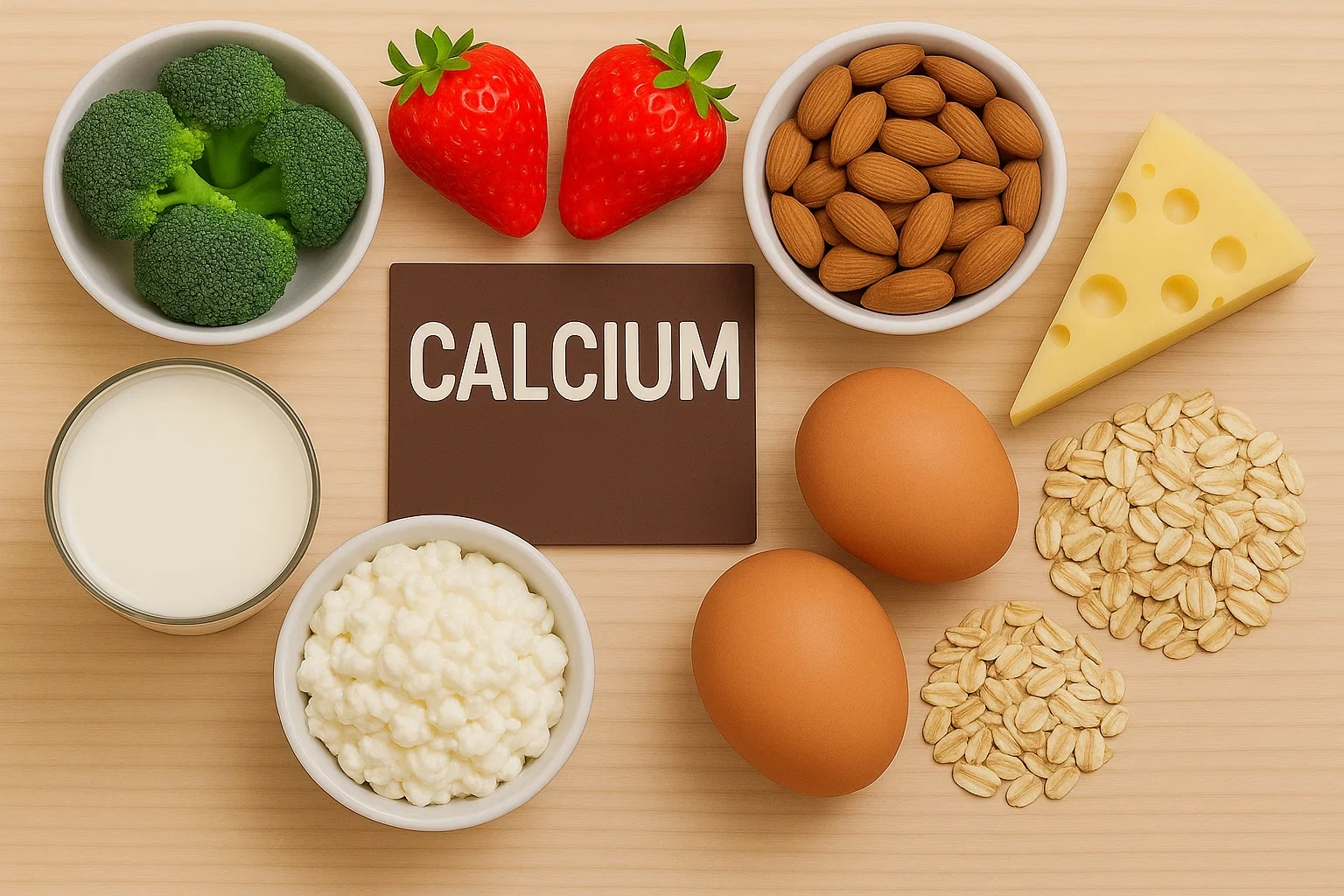
Aim to get the majority of calcium from food where possible. Dairy products, fortified plant milks, tofu made with calcium sulphate, canned fish with soft bones, kale, bok choy, and broccoli are all useful sources. Supplement only the gap that food does not cover, rather than relying on supplements to provide the entire daily requirement.
High spinach intake deserves a note. Spinach contains oxalates that bind calcium in the gut and significantly reduce absorption. Although nutritious, calcium from spinach is largely unavailable and should not count toward daily calcium intake estimates.
Who Should Consider Supplementing
Not every adult over 40 needs a calcium supplement. Women approaching or past menopause, adults with osteopenia or osteoporosis, those who avoid dairy, people with very low vegetable intake, and adults with absorption-impairing conditions all have clear reasons to supplement. Long-term corticosteroid use also increases bone loss and raises supplementation need.
Adults who already eat significant quantities of dairy, fortified foods, and leafy vegetables may already meet their daily requirement and gain little from supplementation. Evaluating dietary intake honestly before purchasing a supplement is worth doing.
Safety, Side Effects and Upper Limits
Calcium supplements are generally well-tolerated. The most common side effect is constipation, particularly with calcium carbonate. Adequate fluid and fibre intake usually keeps this manageable. Splitting doses and switching to calcium citrate resolves constipation for most people.
Kidney stones are a genuine concern at high doses. Adults with a history of calcium oxalate kidney stones should discuss supplementation with their GP before starting. Interestingly, adequate dietary calcium actually reduces kidney stone risk by binding dietary oxalate in the gut before it reaches the kidneys. High-dose supplement use, however, may increase risk.
The tolerable upper intake level for calcium is 2500 mg per day for adults under 50 and 2000 mg per day for those over 50. Exceeding these limits long-term risks hypercalcaemia, causing kidney damage, nausea, weakness, and cardiac complications. Staying within 600 mg per day from supplements, with the rest from food, keeps most adults well within safe limits.
The Bottom Line
Calcium deserves its central place in the bone health conversation for adults over 40, but how you supplement matters enormously. Getting the majority from food is the most evidence-supported approach. Supplementing only the gap that diet does not cover, at 500 to 600 mg per dose, in citrate form for older adults, alongside Vitamin D and K2, is the approach with the strongest evidence and the lowest risk profile.
The cardiovascular concern is real but manageable with appropriate K2 co-supplementation and moderate supplement doses. Taking a large single daily dose of calcium carbonate without Vitamin D or K2 and considering the job done is the worst approach. Instead, treat calcium as one component of a system that includes Vitamin D for absorption, K2 for distribution, and magnesium for balance and activation.
Adults with a history of kidney stones, hypercalcaemia, or cardiovascular disease should discuss calcium supplementation with their GP before starting. The same applies to anyone on corticosteroids, thiazide diuretics, or medications for osteoporosis.