
Vitamin E for Adults Over 40: An In-Depth Review
Vitamin E is one of those nutrients that most adults assume they are getting enough of through a normal diet, and for the majority, that assumption is correct. However, understanding what Vitamin E actually does, how its different forms behave in the body, and where the evidence for supplementation is genuinely strong versus where it falls short requires a closer look. For adults over 40 in particular, the antioxidant and immune-related roles of Vitamin E become increasingly relevant.
This review covers the science honestly, explaining where the evidence is solid, where controlled trials have been disappointing, and where high-dose supplementation carries risks that supplement marketing frequently understates.
What Is Vitamin E?
Vitamin E is not a single compound. It is a family of eight fat-soluble molecules divided into two groups: tocopherols and tocotrienols, each with four subtypes. All share the same basic antioxidant function of protecting cell membranes from oxidative damage, though each has distinct biological activity.
Alpha-tocopherol is the form the body preferentially absorbs and retains. It is also the one that counts toward the official RDA. Most supplements use alpha-tocopherol, and clinical trial data is also predominantly based on this form. However, gamma-tocopherol, the dominant form in the Western diet, plays a different and complementary role. In particular, it neutralises reactive nitrogen species that alpha-tocopherol handles less effectively.
Tocotrienols have attracted growing research interest because of their distinct structural properties. Unlike tocopherols, they penetrate cell membranes more efficiently and may offer superior neuroprotective and anti-inflammatory activity. However, clinical evidence for tocotrienols is less developed, and they are significantly more expensive to supplement. The research direction is promising, but it is worth keeping the evidence hierarchy in mind when choosing a product.
How Vitamin E Works in the Body
Vitamin E’s primary function is to protect polyunsaturated fatty acids (PUFAs) in cell membranes from oxidative damage. PUFAs are particularly vulnerable to a chain reaction called lipid peroxidation, where one oxidised fatty acid triggers a cascading oxidation of neighbouring ones. Vitamin E interrupts this chain by donating a hydrogen atom to the reactive species, neutralising it before it can propagate the damage.
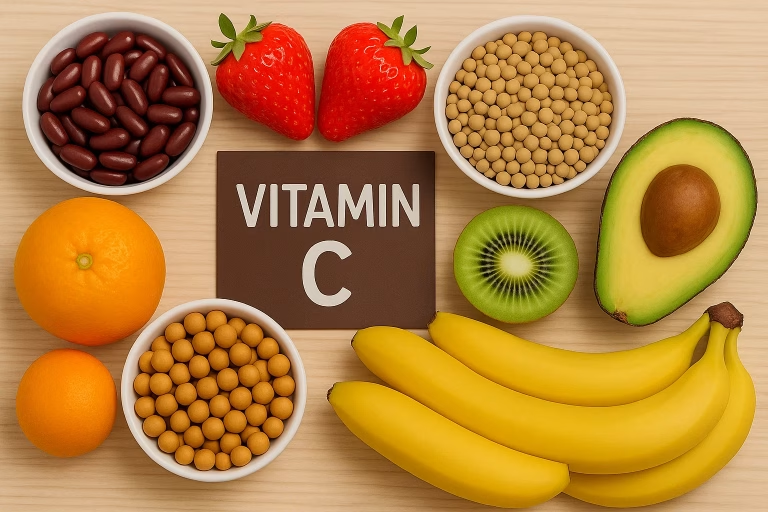
Once Vitamin E has donated its hydrogen, it becomes a relatively stable radical. Vitamin C can then regenerate it back to its active form. This regeneration cycle is one of the most important nutrient interactions in antioxidant biology, meaning Vitamin E and Vitamin C function as a team rather than independently. Adequate Vitamin C therefore significantly extends Vitamin E’s effective antioxidant activity in tissues.
Beyond its antioxidant role, Vitamin E influences gene expression, modulates immune function, and inhibits platelet aggregation. These additional roles help explain some of the broader health associations observed in epidemiological research, even if controlled trials have not always confirmed them.
Why Oxidative Stress Matters More After 40
Oxidative stress, the imbalance between free radical production and the body’s antioxidant defences, accumulates with age. Several factors converge to make this increasingly relevant after 40. Mitochondrial efficiency declines, generating more free radicals per unit of energy produced. Furthermore, the body’s antioxidant enzyme systems become less efficient over time. Chronic low-grade inflammation, common in midlife, also contributes significantly to oxidative burden.
This is the context in which Vitamin E’s role as a fat-soluble antioxidant becomes most relevant. It sits in cell membranes, precisely where oxidative damage is most damaging to cellular integrity. While dietary Vitamin E is generally sufficient for most adults, the combination of increased oxidative load and potentially lower dietary quality in midlife means that understanding one’s actual intake is worth the effort.
Key Benefits: What the Evidence Actually Shows
Antioxidant Protection
The mechanistic case for Vitamin E as a cellular antioxidant is well-established and not meaningfully in dispute. It protects cell membranes from lipid peroxidation and works synergistically with other antioxidants to maintain cellular integrity. At dietary intake levels, this protection is consistent and clinically meaningful, particularly for tissues with high PUFA content such as the brain, lungs, and cardiovascular system.
Immune Function
Vitamin E has a well-documented role in supporting T-cell function and immune response, with effects that become more relevant with age. A landmark Tufts University study found that 200 IU of Vitamin E per day significantly improved vaccine immune response in healthy adults over 65 compared to placebo. This represents some of the stronger clinical evidence for Vitamin E supplementation in older adults.
Cardiovascular Health: A Nuanced Picture
The cardiovascular story for Vitamin E is one of the most instructive examples of how observational evidence and controlled trial results can diverge. Early observational studies, including the Nurses’ Health Study, found strong associations between high Vitamin E intake and reduced cardiovascular disease risk. Based on this promising data, Vitamin E supplementation became widespread in the 1990s.
Subsequently, however, major randomised controlled trials including HOPE and HOPE-TOO found no significant cardiovascular benefit from alpha-tocopherol supplementation. HOPE-TOO actually found a modestly increased risk of heart failure at high doses. This is a case where the supplement evidence was genuinely disappointing, and intellectual honesty requires acknowledging it.
Adequate dietary Vitamin E supports vascular health through its antioxidant function. However, supplementing at high doses beyond dietary adequacy does not appear to provide additional cardiovascular benefit and may carry risk. Much of the supplement marketing around Vitamin E glosses over this important distinction.
Skin Health
Vitamin E has a more solid evidence base for skin health than for cardiovascular outcomes, particularly in relation to UV protection and skin ageing. As a fat-soluble antioxidant, it concentrates in the skin’s sebaceous glands and distributes across the skin surface, providing some protection against UV-induced oxidative damage. Combined oral supplementation with Vitamin E and Vitamin C provides measurable photoprotection and reduces markers of UV-induced skin damage, as several studies confirm.
Topical Vitamin E also has reasonable evidence for improving skin barrier function and hydration. It is a common ingredient in moisturisers and skin repair products for this reason. For adults over 40 concerned about skin ageing, Vitamin E works best as part of a combined approach alongside Vitamin C and sun protection, rather than as a standalone intervention.
Cognitive Health
The brain is rich in PUFAs and consequently vulnerable to lipid peroxidation. Observational evidence consistently links higher Vitamin E status with better cognitive performance in older adults and slower cognitive decline. Some studies find that combining Vitamin E with selenium, which supports the antioxidant enzyme glutathione peroxidase, is associated with particularly strong cognitive protective effects.
Controlled trials in Alzheimer’s disease have produced mixed results. A 1997 New England Journal of Medicine trial found high-dose Vitamin E (2000 IU) slowed disease progression, but a subsequent larger trial found no benefit. Maintaining adequate Vitamin E through diet and moderate supplementation makes biological sense for brain health. However, high-dose supplementation for cognitive protection is not supported by consistent controlled trial evidence.
Eye Health
The AREDS (Age-Related Eye Disease Study) trial found a specific combination of antioxidant nutrients, including Vitamin E at 400 IU, reduced the progression of age-related macular degeneration (AMD) in high-risk individuals by around 25%. This is meaningful clinical evidence for Vitamin E’s role in a specific context. However, the AREDS formulation includes multiple nutrients working together, and Vitamin E in isolation does not have the same level of evidence for AMD prevention. Adults with AMD risk factors should look to the AREDS-2 formulation as the evidence-based approach.
Forms of Vitamin E Supplements
The distinction between natural and synthetic Vitamin E is practically important and often poorly explained on labels. Natural Vitamin E is listed as d-alpha-tocopherol. Synthetic Vitamin E appears as dl-alpha-tocopherol. The natural form is approximately twice as bioavailable as the synthetic form because the body preferentially retains the natural stereoisomer. When comparing doses on labels, this difference matters considerably.
Mixed tocopherol supplements include alpha, beta, gamma, and delta tocopherols. Since gamma-tocopherol is the dominant dietary form and plays distinct biological roles, a mixed tocopherol product more closely mirrors a food-based approach. Several researchers consider this a more physiologically appropriate strategy than isolated alpha-tocopherol alone.
Products including tocotrienols alongside tocopherols represent the broadest coverage, though the additional cost reflects a research base that is still developing rather than firmly established clinical benefits. For general supplementation purposes, natural mixed tocopherols at a moderate dose represent the most balanced approach.
Dosage and Safety: The Upper Limit Matters Here
The RDA for Vitamin E is 15 mg (approximately 22 IU) of alpha-tocopherol per day for adults. Most people with a reasonable diet including nuts, seeds, and vegetable oils meet this through food. Sunflower seeds, almonds, hazelnuts, and wheat germ oil are particularly rich sources.
For supplementation, moderate doses of 100 to 400 IU per day of natural d-alpha-tocopherol are generally considered safe and are the range used in most positive trials. An upper tolerable intake level of 1000 mg (approximately 1500 IU) per day is established, though this does not mean doses approaching that level are advisable.
Bleeding risk is the safety concern that most deserves explicit attention. Vitamin E inhibits platelet aggregation and vitamin K-dependent clotting factor synthesis. At higher doses, this can meaningfully increase bleeding time. Anyone taking anticoagulants like warfarin, antiplatelet drugs like aspirin, or preparing for surgery faces particular risk. Additionally, HOPE-TOO raised a signal for increased heart failure risk at 400 IU per day in adults with existing cardiovascular disease, which is worth noting for that population.
For most adults over 40 without specific risk factors, the practical recommendation is to prioritise dietary Vitamin E from whole foods and supplement with a moderate dose of 100 to 200 IU of natural mixed tocopherols if dietary intake is likely to be low. Higher doses are generally not well-supported by the evidence and carry a more complex safety profile.
Does Most Adults Need to Supplement?
Genuine Vitamin E deficiency is uncommon in healthy adults. It occurs primarily in people with fat malabsorption conditions, including Crohn’s disease, coeliac disease, and cystic fibrosis, because Vitamin E absorption depends on normal fat digestion and transport. Rare genetic conditions affecting Vitamin E transport proteins also cause deficiency.
For adults eating a varied diet including nuts, seeds, and vegetable oils, supplementation is generally optional rather than essential. However, certain situations make it more worth considering. Adults with diets low in fat (since Vitamin E comes predominantly from fat-containing foods), those with chronic inflammatory conditions that increase oxidative stress, people taking statins (which may modestly reduce Vitamin E levels), and adults over 65 concerned about immune function are among those with the clearest reasons to assess their intake and consider supplementation.
The most practical first step is not to immediately reach for a supplement but to evaluate dietary sources honestly. A handful of almonds (about 30g) provides roughly 7.5 mg of Vitamin E. A tablespoon of sunflower oil provides approximately 6 mg. A diet genuinely low in these foods warrants attention. One already including them regularly probably does not need supplementation at all.
Choosing a Quality Supplement
Look for natural d-alpha-tocopherol rather than dl-alpha-tocopherol on the label. A mixed tocopherol formula provides broader coverage. Third-party testing is worth prioritising, particularly because the fat-soluble nature of Vitamin E makes accurate dosing important. Oil-based softgel capsules improve absorption compared to dry powder capsules, since Vitamin E requires dietary fat for absorption and an oil base provides that directly.
Avoid products making extravagant disease prevention or anti-ageing claims. While genuine in specific areas, the evidence base does not support the broad claims that appear on many supplement labels.
The Bottom Line
Vitamin E is a legitimate and important nutrient with well-established antioxidant and immune-supporting roles. Its function as a fat-soluble cellular antioxidant is not in doubt, and its interaction with Vitamin C in the antioxidant regeneration cycle makes it part of a meaningful nutritional system rather than an isolated nutrient.
However, the cardiovascular evidence is weaker than the early observational data suggested, and high-dose supplementation carries genuine risks around bleeding and platelet function. The most sensible approach for adults over 40 is to ensure dietary adequacy through nuts, seeds, and vegetable oils, and to supplement with a moderate dose of natural mixed tocopherols only if dietary intake is genuinely insufficient. For a broader overview of how Vitamin E fits alongside other key vitamins for adults in midlife, our full vitamins review section covers the complete picture.
If you are taking anticoagulants, antiplatelet drugs, or preparing for surgery, speak with your GP before supplementing with Vitamin E. Adults with existing cardiovascular disease should also discuss higher-dose supplementation with their doctor given the HOPE-TOO trial findings.