Vitamin C for Adults Over 40: An In-Depth Review
Vitamin C is probably the supplement most adults feel they already understand. It prevents scurvy, it helps with colds, and most people know it from orange juice. The reality is somewhat more interesting than that, and for adults over 40, a couple of its less-discussed roles are worth understanding properly.
This review covers what Vitamin C actually does in the body, where the evidence is strong and where it is overstated, why the collagen and iron absorption connections become particularly relevant in midlife, and how to think about whether supplementing makes sense for you.
What Is Vitamin C?
Vitamin C, also known as ascorbic acid, is a water-soluble vitamin and potent antioxidant. Unlike most mammals, humans cannot synthesise Vitamin C internally. We lost that ability through a genetic mutation millions of years ago. Since then, we have depended entirely on dietary sources. Because it is water-soluble, the body does not store large amounts of it. Regular intake through food or supplementation is therefore needed to maintain adequate levels.
Its roles in the body are wide-ranging. It acts as a cofactor for enzymes involved in collagen synthesis, carnitine production, and neurotransmitter metabolism. Beyond its own antioxidant work, it regenerates other antioxidants including Vitamin E after they have neutralised free radicals. Vitamin C also supports immune cell function, with results more nuanced than either enthusiastic supplement marketing or dismissive mainstream commentary suggests.
Why Vitamin C Matters More After 40
Several of Vitamin C’s functions become specifically relevant as adults move through their 40s and beyond.
Collagen production declines from the mid-20s and becomes noticeably slower after 40. Since Vitamin C is an essential cofactor for the collagen-synthesising enzymes, adequate intake directly supports collagen production and repair in skin, joints, and connective tissue. This is why Vitamin C features in collagen supplement formulas. Taking the two together produces better results than collagen peptides alone. For a full picture of how this works, our collagen review covers the synthesis mechanism and the evidence for combined supplementation in detail.
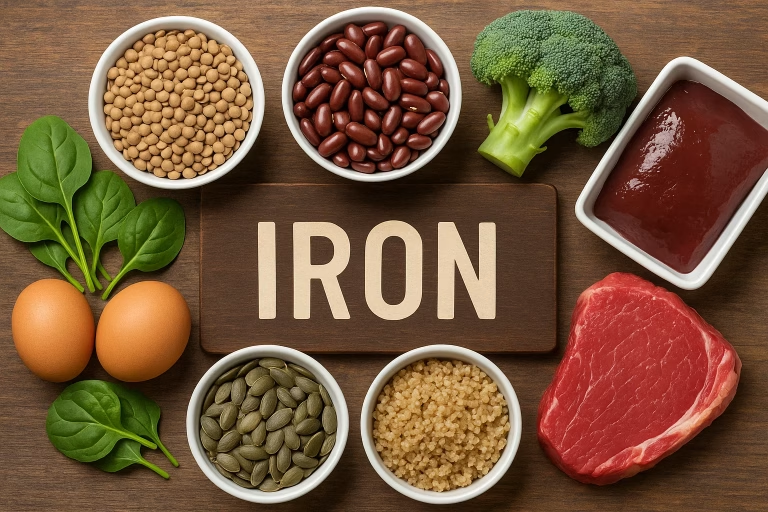
Iron absorption is another area where Vitamin C’s role becomes more practically important in midlife. Vitamin C enhances non-haem iron absorption (the form found in plant foods) by converting it from ferric to ferrous form in the gut. Adults managing iron on a plant-based diet will find this interaction genuinely useful. Women whose iron needs shift around perimenopause also benefit. Our iron review explains the non-haem versus haem iron distinction and when pairing these two nutrients makes the most practical sense.
Oxidative stress accumulates with age. The body’s own antioxidant defences become less efficient over time, and chronic low-grade inflammation, increasingly common after 40, generates additional free radical load. Vitamin C’s role as a water-soluble antioxidant helps manage this burden, working alongside other antioxidant nutrients rather than as a standalone solution.
Key Benefits: What the Evidence Actually Supports
Immune Function
This is the area most associated with Vitamin C in public perception, and the evidence here is more nuanced than the marketing suggests. Vitamin C does not prevent colds in most people. However, it does appear to reduce the duration and severity of colds when taken regularly. A large Cochrane review found consistent daily supplementation reduced cold duration by roughly 8% in adults and 14% in children. For people under significant physical stress, such as endurance athletes or those in cold conditions, regular supplementation also reduces cold incidence.
Beyond colds, Vitamin C supports the function of neutrophils, lymphocytes, and other immune cells. It accumulates in white blood cells at concentrations around 50 times higher than in blood plasma. This suggests a specific, active role in immune response rather than simply being a bystander antioxidant.
Collagen Synthesis and Skin Health
Vitamin C is a required cofactor for prolyl hydroxylase and lysyl hydroxylase. These enzymes stabilise the collagen triple helix structure. Without adequate Vitamin C, newly synthesised collagen is unstable and breaks down quickly. Scurvy, the clinical result of severe deficiency, involves wound healing failure, bleeding gums, and skin breakdown. All of these are collagen-dependent tissues.
At normal supplementation levels, Vitamin C supports skin collagen maintenance and wound repair. Several trials show improvements in skin elasticity and wrinkle depth with consistent Vitamin C intake. Effect sizes are modest compared to dedicated collagen supplementation, however. Both approaches work through different parts of the same pathway and are more effective in combination.
Iron Absorption
Taking Vitamin C alongside iron-rich meals or iron supplements significantly improves non-haem iron absorption. Some research shows increases of 2 to 3 times baseline absorption. This is a clinically meaningful effect for adults who rely on plant-based iron sources or who have borderline iron status. Timing matters here. Consuming Vitamin C at the same meal as iron-containing foods or supplements is what produces the absorption benefit.
Cardiovascular Health
Observational studies consistently find associations between higher Vitamin C intake and lower cardiovascular disease risk, but controlled intervention trials have been less convincing. The honest conclusion is that adequate Vitamin C intake, achievable through diet for most people, supports vascular health through antioxidant and collagen-synthesis roles. Supplementing at very high doses to achieve further cardiovascular benefit is not supported by strong clinical trial evidence.
Cognitive Health and Brain Function
Vitamin C concentrates in the brain at levels higher than almost any other tissue. It supports neurotransmitter synthesis, including dopamine and noradrenaline production, and protects neurons from oxidative damage. Several observational studies find associations between higher Vitamin C status and better cognitive performance in older adults. Lower Vitamin C levels also appear in people with dementia compared to age-matched controls. The causal direction is not definitively established, but the biological plausibility is strong and the data is consistent.
Do Most Adults Over 40 Need to Supplement?
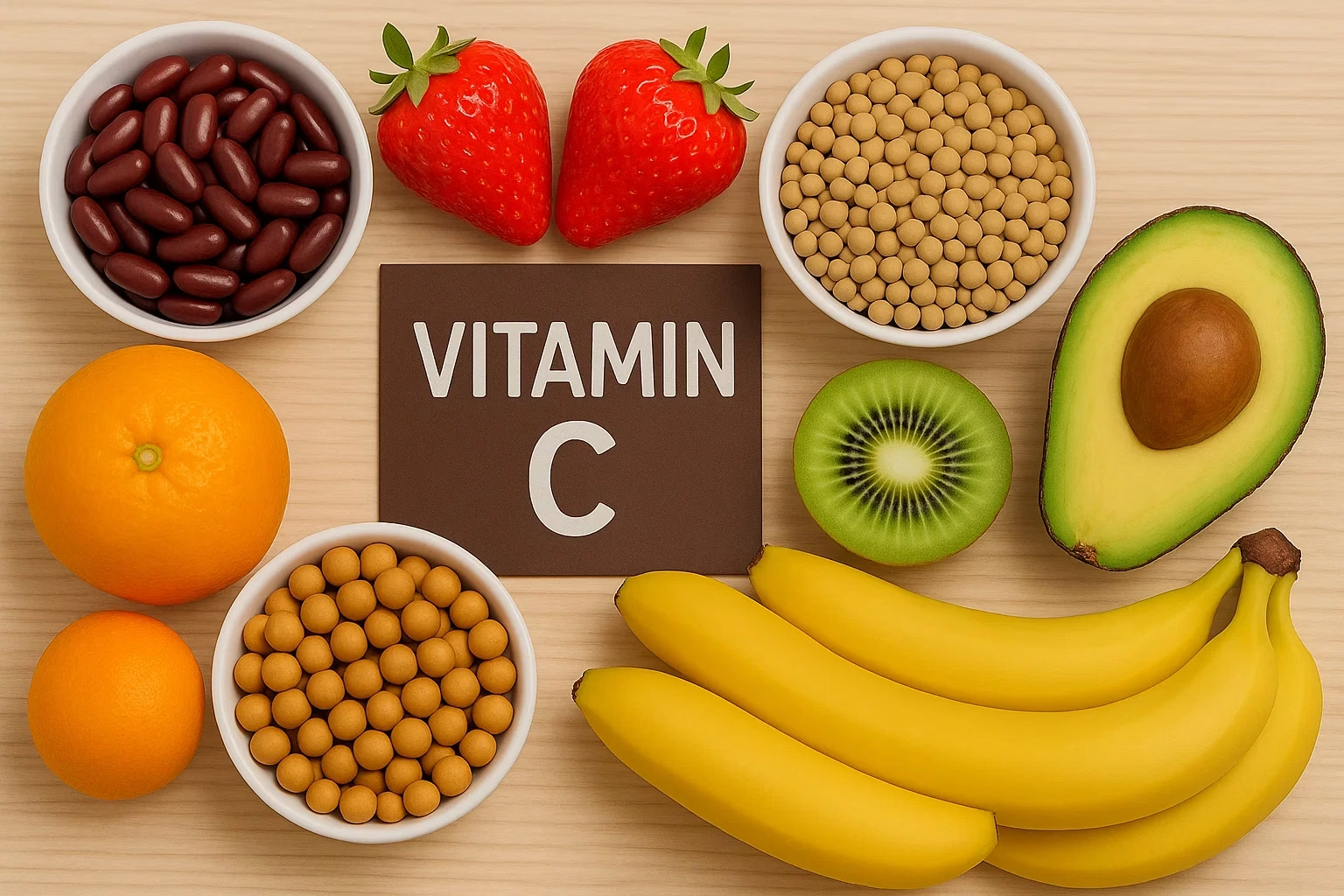
This is the honest question, and the answer is: it depends on diet. Vitamin C is abundantly available in food. A single medium bell pepper provides around 130 mg of Vitamin C, which is well above the RDA of 75 to 90 mg per day. Kiwis, strawberries, broccoli, citrus fruits, and most berries are also rich sources. Adults who eat a varied diet including regular fruit and vegetables are unlikely to be deficient. Supplementation adds little on top of what food already provides in these cases.
Supplementation makes more practical sense in specific contexts. Smokers have significantly higher Vitamin C requirements because smoking increases oxidative stress and accelerates Vitamin C turnover. Those with very limited fruit and vegetable intake are genuinely at risk of insufficiency. Meanwhile, adults taking Vitamin C to enhance iron absorption or pair with collagen supplementation have clear mechanistic reasons to supplement, regardless of baseline dietary intake. People going through periods of high physical or psychological stress may also benefit from higher intake, since stress increases oxidative demand.
Forms of Vitamin C Supplements
Ascorbic acid is the standard form and the most extensively researched. It is the cheapest and most widely available option. The main downside is acidity, which can irritate the stomach at higher doses in sensitive individuals.
Buffered Vitamin C (sodium ascorbate, calcium ascorbate) neutralises the acidity by binding ascorbic acid to a mineral. Gentler on the stomach, it is worth considering for anyone who finds standard ascorbic acid causes digestive discomfort. The trade-off is additional sodium or calcium intake, which may be relevant for those monitoring either.
Ester-C is a patented form of calcium ascorbate combined with Vitamin C metabolites. Some evidence suggests slightly better retention in white blood cells compared to standard ascorbic acid, though the clinical significance of this difference at normal supplementation doses is modest. It is a reasonable choice for those who tolerate ascorbic acid poorly and want an alternative to standard buffered forms.
Liposomal Vitamin C encapsulates ascorbic acid in fat-soluble liposomes, which may improve absorption at higher doses by bypassing some of the intestinal saturation that limits conventional oral Vitamin C absorption. The evidence for meaningful superiority at standard doses (under 1 g per day) is limited, but it represents a plausible approach for those seeking higher-dose supplementation with better gastrointestinal tolerance.
Vitamin C with bioflavonoids combines ascorbic acid with plant compounds that may modestly enhance its bioavailability and antioxidant activity. The evidence base is smaller than for ascorbic acid alone, but bioflavonoids are well-tolerated and the combination is a reasonable choice for general supplementation.
Dosage Guidance
The RDA sits at 75 mg per day for women and 90 mg for men, with an additional 35 mg per day recommended for smokers. Plasma Vitamin C is saturated at around 200 mg per day in most adults, meaning that at doses above this threshold, intestinal absorption efficiency declines sharply and excess is excreted in urine.
For general immune and antioxidant support, 200 to 500 mg per day is a practical and well-evidenced range. Higher doses of 500 to 1000 mg per day are commonly used during periods of illness or high stress, and are generally well-tolerated in healthy adults. The tolerable upper intake level is 2000 mg per day, and exceeding it increases the risk of digestive side effects including diarrhoea.
Splitting the daily dose across two or three meals improves absorption at higher doses, because intestinal uptake is a saturable process. Taking it with meals also reduces stomach irritation from ascorbic acid forms.
Safety and Side Effects
Vitamin C has an excellent safety record at normal supplementation doses. At higher doses, the most common side effects are gastrointestinal: stomach cramps, heartburn, and loose stools. Both are dose-dependent and typically resolve by reducing intake or switching to a buffered form.
The kidney stone question deserves attention because it is frequently raised. High-dose Vitamin C increases urinary oxalate excretion, and oxalate is a component of the most common type of kidney stone. However, evidence that doses under 1000 mg per day meaningfully increase kidney stone risk in healthy adults is weak. Adults with a history of kidney stones or kidney disease should nevertheless consult their GP before taking high-dose Vitamin C.
One interaction worth noting is that high-dose Vitamin C can interfere with some blood glucose monitoring devices, giving falsely elevated or reduced readings. Adults with diabetes using such devices should therefore be aware of this before supplementing.
The Bottom Line
Vitamin C is genuinely useful for adults over 40, but the reasons are more specific than the broad “immune booster” framing suggests. Collagen synthesis is one clear reason to supplement, making it a practical pairing with collagen products. Non-haem iron absorption also improves significantly with Vitamin C, which is clinically meaningful for those managing iron through plant-based diets. Additionally, its antioxidant function supports overall oxidative balance in a body dealing with increasing free radical load.
For most adults eating a reasonably varied diet, supplementation is optional rather than essential. However, those with low fruit and vegetable intake, high stress, restricted diets, or specific goals around collagen synthesis or iron absorption, a daily dose of 200 to 500 mg of ascorbic acid or a buffered equivalent is a sensible and affordable addition. It works best as part of a broader approach to nutrition after 40 rather than as a standalone fix. Our full vitamins review section covers the other key nutrients worth considering alongside it.
If you have kidney disease, a history of kidney stones, or diabetes requiring blood glucose monitoring, speak with your GP before taking Vitamin C supplements at higher doses.